
How Chiropractic Care Helps Reduce Inflammation in Performance Horses
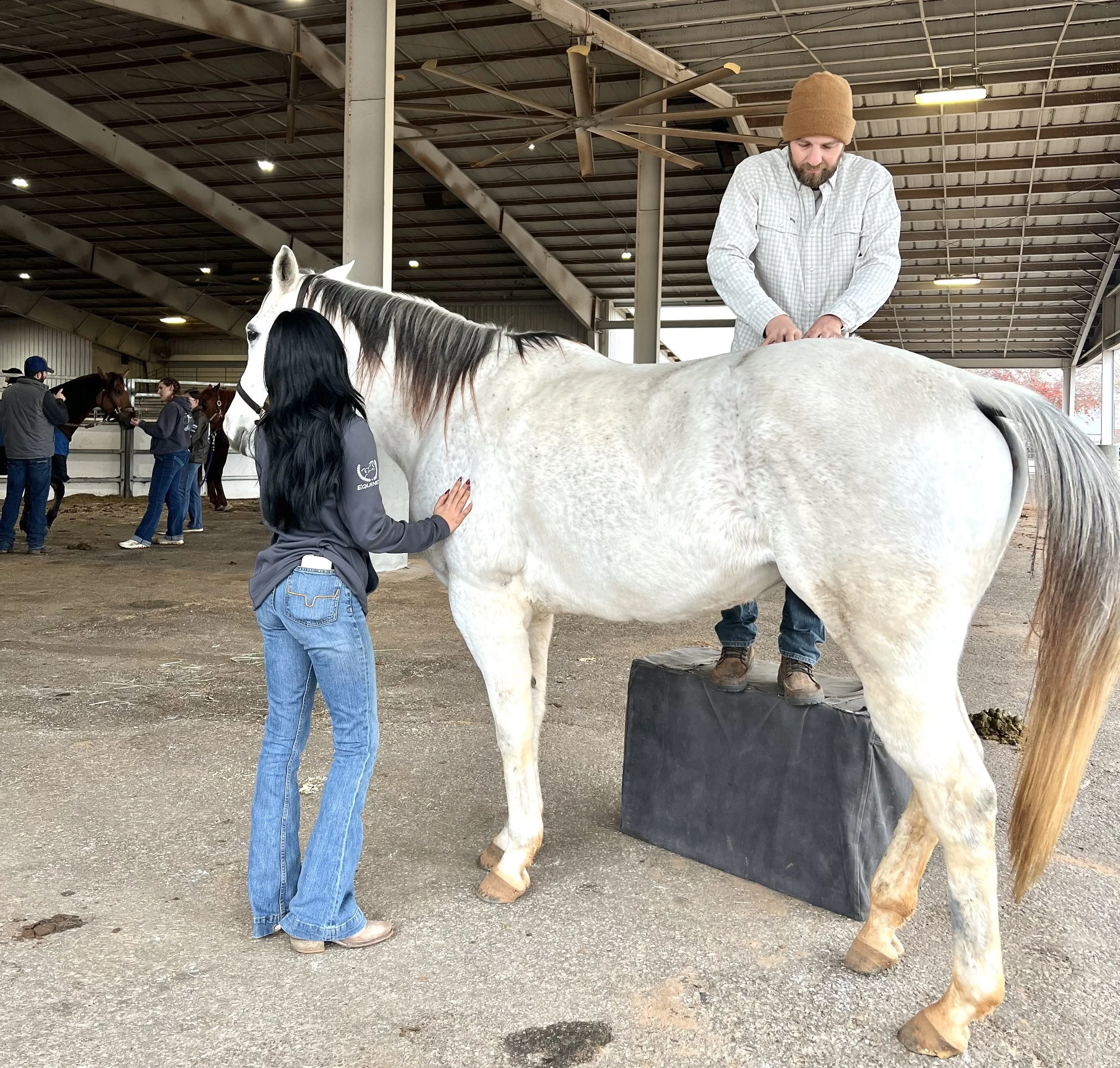
Inflammation is a natural part of the body’s healing process—but in performance horses, chronic or repeated inflammation can quietly limit movement, reduce comfort, and affect performance long before obvious lameness appears. For barrel horses and hunter-jumpers especially, the repetitive, high-impact demands of their jobs place stress on joints, soft tissues, and the nervous system.
Equine chiropractic care plays an important role in supporting the horse’s body by improving movement, nervous system communication, and joint function—key factors in reducing both localized and whole-body inflammation.
Understanding Inflammation in the Performance Horse
Inflammation often develops when joints or tissues aren’t moving optimally. This can happen due to:
Repetitive motion (tight turns, jumping efforts, landing forces)
Compensation patterns after minor injuries
Poor biomechanics or asymmetrical movement
Restricted joints in the spine or limbs
When joints lose normal motion, surrounding tissues experience increased stress. Over time, this can lead to swelling, soreness, decreased range of motion, and reduced performance.
The Spine, Nervous System, and Inflammation
The spine protects the nervous system, which controls every muscle, joint, and organ in the body. When spinal joints become restricted or misaligned, nerve signaling can be disrupted. This may contribute to:
Increased muscle tension
Poor coordination between muscle groups
Altered joint loading patterns
Reduced ability for tissues to heal efficiently
Chiropractic adjustments restore normal motion to restricted joints, allowing the nervous system to communicate more clearly with the rest of the body. Improved nerve function supports balanced movement and helps prevent the stress patterns that drive inflammation.
How Chiropractic Adjustments Reduce Joint Inflammation
Healthy joints depend on movement. When a joint moves properly:
Synovial fluid circulates to nourish cartilage
Waste products are cleared more efficiently
Surrounding muscles remain balanced and elastic
Chiropractic adjustments help restore proper joint motion, which:
Reduces abnormal pressure on joint surfaces
Improves fluid exchange within the joint
Decreases compensatory muscle tension that pulls on joints
By addressing restrictions early, chiropractic care can help limit the cycle of irritation that leads to chronic joint inflammation.
Whole-Body Effects: More Than Just the Spine
Although chiropractic care is often associated with the spine, its effects extend throughout the body. When movement improves in one area, the entire musculoskeletal system benefits.
For performance horses, this can mean:
More symmetrical stride length
Improved engagement of the hind end
Less strain on the shoulders, hips, and stifles
Reduced soft-tissue inflammation caused by overcompensation
Barrel horses often show benefits in faster, cleaner turns with less stress on the hocks and sacroiliac region. Hunter-jumpers may demonstrate improved bascule, smoother landings, and better consistency between fences.
Supporting Recovery and Long-Term Soundness
Chiropractic care does not replace veterinary diagnosis or treatment, but it works alongside proper conditioning, farriery, saddle fit, and training programs. When used proactively, adjustments can:
Support recovery between competitions
Help prevent minor restrictions from becoming major issues
Promote longevity in a demanding athletic career
A Proactive Approach to Performance Health
Inflammation doesn’t always show up as obvious lameness. Often, it first appears as subtle changes—resistance in training, uneven transitions, reduced flexibility, or a drop in performance. Regular chiropractic evaluations help identify and address these changes early, supporting your horse’s comfort, movement, and overall well-being.
For performance horses asked to give their best every run or every round, maintaining proper joint motion and nervous system function is a key part of keeping inflammation under control—and keeping them feeling and performing their best.